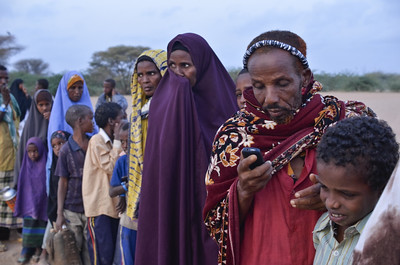
The reduced tax rate on electronic transactions is unlikely to satisfy Ghanaians given the country’s rising inflation…
Taxing transactions made via digital financial services differently from those made via traditional banking services can…
As I participate in the World Economic Forum in Davos this week, I feel a keen…
Gender and tax: As Africa increasingly introduces specific taxes on digital financial services (DFS) such as mobile money, do DFS taxes exacerbate or reduce gender inequality?…
From streamlining primary healthcare to amplifying agricultural outcomes, digital IDs matter. Here are some of the reasons why……
The 2022 United Nations Climate Change Conference, also known as the annual Conference of the Parties…
Africa’s governments need tax revenue to fund everything from education and social welfare to paying international debts. No wonder governments are eyeing digital financial services (DFS) – a rapidly growing, highly profitable industry – for additional revenue….
From 1st October 2022 Tanzania eliminated the levies on certain electronic money transfers, but not on mobile money….
In Ghana, the “e-levy” has been linked to the current administration’s “Ghana Beyond Aid” strategy for reducing aid dependence….
Regional tax harmonisation is controversial, with compelling arguments for and against. Is it desirable? Or beneficial? And if so, to whom?…
When the Taliban dramatically gained control of Afghanistan in August 2021, they used bombs and guns to swiftly overcome state security forces. But they also had another valuable and effective weapon at their disposal: taxes….
Introduced in May 2022, Ghana’s e-levy is a 1.5 per cent tax on the transfer amount of electronic transactions. The objective is to improve tax revenues by tapping into fast-growing digital financial services (DFS). However, many exemptions are applied to the tax design….
This website uses cookies so that we can provide you with the best user experience possible. Cookie information is stored in your browser and performs functions such as recognising you when you return to our website and helping our team to understand which sections of the website you find most interesting and useful.
Strictly Necessary Cookie should be enabled at all times so that we can save your preferences for cookie settings.
This website uses Google Analytics to collect anonymous information such as the number of visitors to the site, and the most popular pages.
Keeping this cookie enabled helps us to improve our website.