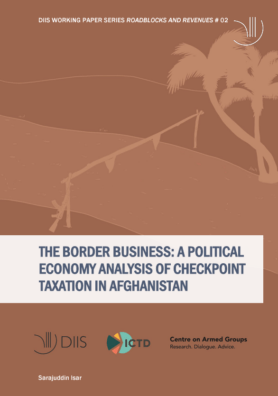
Roadblocks and Revenues 2
Checkpoints and the transit taxes that can be levied at them have been central to the vagaries of Afghan state formation and conflict—and are crucial to understand the rise to power of the Taliban.
In this new working paper Sarajuddin Isar, former chief of staff of the Central Bank of Afghanistan and now a scholar, posits that checkpoint taxation is a key means of creating and negotiating rents between state and non-state actors, driving political settlements and conflict. The study underscores the significance of checkpoint taxation not only in financing the Taliban’s insurgency, which contributed to the collapse of the Republic, but also in transforming a rebel group into a de facto authority. While the paper focuses predominantly on the turbulent post-2001 period and the rise to power of the Taliban, it shows these dynamics are lodged within broader historical struggles spanning centuries.
This paper is the second in a new working paper series on Roadblocks and revenues, a collaboration between ICTD, the Danish Institute for International Studies (DIIS), and the Centre on Armed Groups (CAG).
The working paper series is generously funded by the Carlsberg Foundation under the Semper Ardens: Accelerate grant ‘TRADECRAFT’. Read more about the project here.
Read the first paper of the series here.