Skip to content

Main Navigation

  • Research
        • Our Research Themes
        • Tax Administration and Compliance
        • Climate and Environmental Tax
        • Digital Public Infrastructure (DPI) and Tax
        • Tax and Governance
        • Gender and Tax
        • Informality and Tax
        • International Tax
        • Subnational and Property Tax
        • Taxing High-Net-Worth Individuals
        • Programmes and networks
        • DIGITAX Research Programme
        • Gender and Tax Community of Practice
        • Local Govt. Revenue Initiative
        • Ethiopian Tax Research Network
        • Nigerian Tax Research Network
        • Projects
        • Datasets
        • Research Grants
  • Publications
  • News & Analysis
        • News & Events
        • Blogs
        • Media
  • Learning Portal
        • Learn With Us
        • International Tax
        • Property Taxation
        • Tax Administration and Compliance
        • Tax and Gender
        • Tax and Governance
        • Tax and Informality
  • About
        • About Us
        • Our Team
        • Our Approach
        • Contact Us
        • Newsletter

  • en
  • fr

Tax, Conflict, and Fragility

In fragile and conflict-affected settings, taxation is not only a source of revenue but also a critical foundation for building state legitimacy, strengthening public authority, and fostering more equitable governance. Our research explores how taxation functions in fragile settings, examining the challenges, risks, and opportunities it presents for peacebuilding, state-building, and citizen engagement. We aim to inform more coherent and context-sensitive policy approaches that support sustainable development and effective governance in fragile states.

Our work focuses both on how formal tax systems operate in fragile settings, as well as on the informal fiscal systems that often exist in these contexts. This includes, but is not limited to, work on:

  • Building tax systems in fragile contexts
  • The relationship between tax and statebuilding
  • Armed group taxation
  • Informal taxation
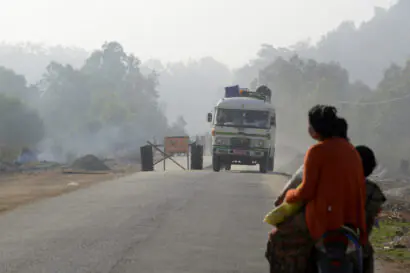
  • Roadblock taxation
Share
Home Research theme Tax, Conflict, and Fragility

News and events

See all news and events
News
The Global Dataset on Armed Group Taxation team (from left to right): Diego Sandova, Tanya Bandula-Irwin (ICTD), Max Gallien (IDS and ICTD), Vanessa van den Boogaard (ICTD), Florian Weigand (Centre on Armed Groups), Ashley Jackson (Centre on Armed Groups).
April 2025
Launch of new project on armed group taxation

Hosted by the United Nations University-World Institute for Development Economics Research (UNU-WIDER), in partnership with the…

News
Armed Soldiers at Checkpoint near Kabul, Afghanistan
June 2024
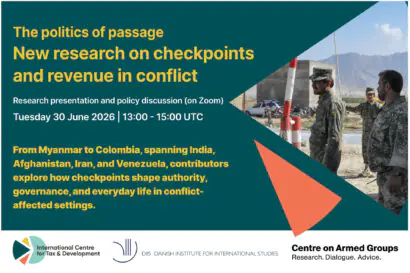
How can roadblocks and revenues shape governance? New working paper series launched

The series aims to shed light on checkpoints in conflict contexts across the world and provide a new window into dynamics of authority and power….

News
December 2022
Call for papers: Roadblocks and revenues – new geographies of taxation in conflict

Researchers are now invited to submit their paper for an upcoming workshop, “Roadblocks and revenues: new…

Featured Publications

Journal Article

Citizens’ aid preferences amid state collapse: Experimental evidence from Haiti

April 2026
Ana Isabel López García & Sarah Berens
Partner Publication

The Politics of Passage: Roadblocks, Taxation and Control in Conflict

June 2024
Peer Schouten, Max Gallien, Shalaka Thakur, Vanessa van den Boogaard & Florian Weigand
Working Paper

Beyond Greed: Why Armed Groups Tax

November 2021
Tanya Bandula-Irwin, Max Gallien, Ashley Jackson, Vanessa van den Boogaard & Florian Weigand
See all Related Publications

Join our mailing list

Related blogs

See all Related Blogs
Addis Ababa busy street view
February 2026|
Blog

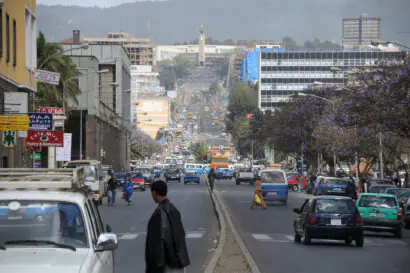
Roadblock taxation: the dangers of extra-legal payments in Ethiopia

by Zerihun Asegid

In recent years, Ethiopia has witnessed a significant rise in one particularly harmful extra-legal practice: roadblock taxation. …

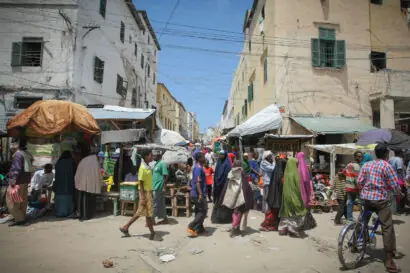
General street scene in Hamar Weyne market in the Somali capital Mogadishu
April 2025|
Blog

Why tax matters in fragile states and how donors can support it

by Vanessa van den Boogaard

Fragile contexts are home to 24% of the world’s population (1.9 billion people), and three-quarters (73%)…

February 2025|
Blog

In the Midst of Conflict and Gang Rule: What Would Make Haiti’s Wealthy Supportive of Property Tax?

by Ana Isabel López García & Sarah Berens

Imagine living in a country where non-state actors provide most basic services instead of the state,…

Andrew Kayanu Traffic Check ATM painting
June 2023|
Blog

Roadblocks and revenues: new geographies of taxation in conflict

by Mina Radončić & Markus Geray

Checking out checkpoints The DIIS, together with the ICTD and the Centre on Armed Groups, hosted…

[email protected]
+44 (0) 1273 606261
International Centre for Tax and Development, Institute of Development Studies (IDS) Brighton, BN1 9RE, United Kingdom
Connect with us
  • Facebook
  • Bluesky
  • Linkedin
  • YouTube
Explore
  • Our Team
  • Our Approach
  • Contact Us
  • Learn with Us
  • News & Events
  • Blogs
Join our mailing list
Our base
IDS logo
Our donors
Gates Foundation logo UKAID logo NORAD logo
© 2026 ictd.ac | Privacy Policy

We are using cookies to give you the best experience on our website.

You can find out more about which cookies we are using or switch them off in .


Strictly Necessary Cookies

3rd Party Cookies

Privacy Overview

This website uses cookies so that we can provide you with the best user experience possible. Cookie information is stored in your browser and performs functions such as recognising you when you return to our website and helping our team to understand which sections of the website you find most interesting and useful.

Strictly Necessary Cookies

Strictly Necessary Cookie should be enabled at all times so that we can save your preferences for cookie settings.

Analytics

This website uses Google Analytics to collect anonymous information such as the number of visitors to the site, and the most popular pages.

Keeping this cookie enabled helps us to improve our website.