With informal employment accounting for 83% of total employment in Greater Accra, improving how governments understand and engage the informal economy is central to building fair and effective tax systems.
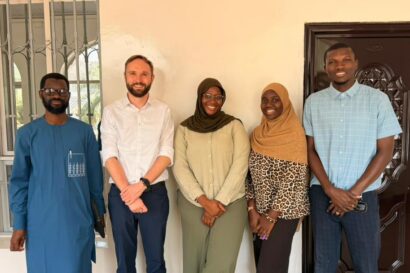
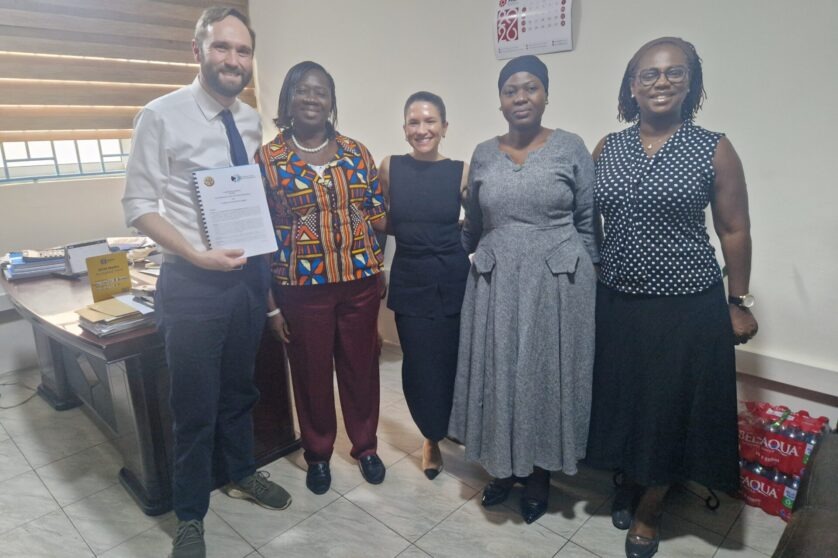
The International Centre for Tax and Development (ICTD) has signed three new Memoranda of Understanding (MOUs) with municipal authorities in Accra, Ghana, marking an important step in a five-year research partnership on taxation and service provision in the city’s markets.
The agreements formalise collaboration between ICTD, the Accra Metropolitan Assembly, the Korle Klottey Municipal Assembly, and the La Nkwantanang Madina Municipal Assembly.
They support a joint project between ICTD, Women in Informal Employment: Globalizing and Organizing (WIEGO), with whom ICTD has a longstanding partnership, and the Institute of Statistical, Social and Economic Research (ISSER) at the University of Ghana, examining taxation and public services in Accra’s city markets.
Nurturing partnerships with municipal authorities to strengthen local governance
Municipal governments are central actors in market taxation and service provision. In Accra, assemblies are responsible for collecting market fees and levies, maintaining infrastructure, and delivering essential services such as sanitation and waste management.
The new MOUs formalise ICTD’s close engagement with municipal authorities in Accra and establish a framework for collaboration in the next stages of the project. These relationships are central to ensuring that the research remains demand-driven, grounded in local realities and responsive to stakeholder priorities.
This work is led by ICTD Research Leads Max Gallien and Vanessa van den Boogaard, whose research focuses on the taxation of informal economies, state-society relations, and taxation in fragile settings.
“Local governments sit at the heart of taxation and service delivery in informal economies. These partnerships allow us to work closely with municipal authorities and market stakeholders to better understand how taxation systems function in practice and how they can be strengthened in ways that are fair, transparent, and supportive of livelihoods,” said Vanessa van den Boogaard.
ICTD is also exploring additional partnerships with other municipalities as the project develops.
Advancing research on informal economies and local taxation in Accra
Launched last year at a workshop rallying representatives from government institutions, international donors, and a range of civil society organisations, this research represents the largest project on market taxation. It builds on two rounds of large-scale surveys with market traders, alongside a structured intervention aimed at strengthening communication and transparency around how market tax revenues are spent, and support service improvements in selected markets.
Over the next few years, the research will combine rigorous empirical analysis with sustained engagement with traders, market associations, and municipal authorities. By integrating quantitative survey data from a subset of Accra’s 60-plus markets, and in-depth interviews with market leaders and tax officials, the project aims to generate new evidence on the political, social and economic consequences of informal sector taxation.
“There is a persistent narrative that informal markets represent untapped revenue potential. Our research suggests the reality is far more complex,” said Max Gallien.
“By combining rigorous research with sustained engagement in Accra’s markets, we hope to generate evidence that supports more equitable taxation practices and more responsive service delivery,” he added.
The role of subnational taxation and governance
The initiative further reflects ICTD’s longstanding engagement with subnational taxation and governance, especially through the Local Government Revenue Initiative programme. By focusing on municipal revenue systems and service provision, the project contributes to a growing body of work examining how local institutions shape fiscal capacity, equity, and accountability.
As the next phase of the research begins, ICTD looks forward to deepening collaboration with its Ghanaian partners and generating insights that advance both academic understanding and practical policy reform, translating evidence into impact.
Related resources:
- Journal Article: The taxed informal economy: Fiscal burdens and inequality in Accra by Nana Akua Anyidoho, Max Gallien, Michael Rogan and Vanessa van den Boogaard
- Policy Brief: Why the Informal Sector is not a Tax Goldmine by Max Gallien
- Working Paper: Thinking Beyond Revenue: Estimating the Cost Effectiveness of Ghana’s Presumptive Tax Stamp by Max Gallien and Alex Kombat
- Blog: Resolving tax disputes: Study of market vendors and local councils in Malawi by Tizgowere Msiska and Masauko Thawe
See more of our work on informality and tax.