It is an interesting time to be working on international tax, where a number of forces are at play in different global spaces, of varying influence and significance. We describe this as a regime complex, with “overlapping organisations, norms and rules”. In fact, this “complex” has got more varied with the introduction of a new UN Framework Convention, which is currently being negotiated (see my earlier blog on this).
Historically however, the key UN tax body has been the UN Committee of Experts on International Cooperation in Tax Matters, a governance body independent of the Framework Convention, whose newly appointed members met for the first time last month.
I had the privilege to attend their first meeting and will in this blog explore the role of the UN Tax Committee, review the key decisions made during this session, and provide some insights of where ICTD has provided research that is valuable to different areas of work of the Committee.
The role of the Committee: A technical body for lower-income countries
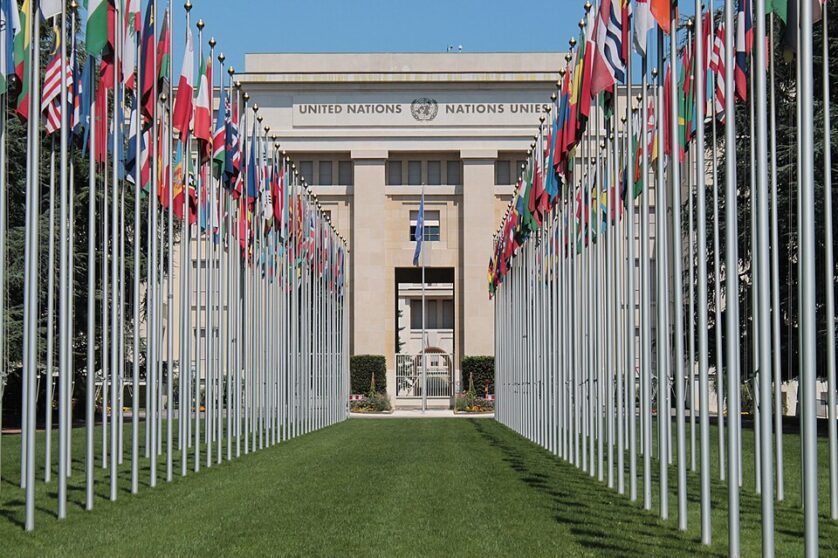
The Committee convened for a new mandate (2025-2029) for the first time in Geneva from October 21-24 to decide on its workplan for the next 5 years. Two Co-Chairs were elected to lead the Committee’s work going forward: Mathew Olusanya Gbonjubola (Nigeria) and Trude Steinnes Sønvisen (Norway). In addition, the Committee established several subcommittees and defined their respective mandates, laying the institutional groundwork for the years ahead.
The Committee comprises 25 members appointed in their personal capacity, not as state delegates. While it aims for consensus, it can fall back on majority voting. Observers from member states can attend and intervene, but do not vote or join closed sessions.
The Committee’s most prominent contribution is the UN Model Tax Convention, which provides model language for the negotiation of bilateral tax treaties. While originally based on the OECD Model, it has increasingly diverged to better reflect the interests of capital-importing states, most notably in its stronger source-based taxing rights. An example is the inclusion of Article 12A on Fees for Technical Services in the 2017 UN Model, which legitimized and accelerated the spread of the provision in bilateral treaties, even though similar clauses had appeared in practice beforehand. Beyond the model treaty, the Committee has also produced accessible guidance on issues like transfer pricing, tax certainty and wealth taxation, to name but a few.
What sets the UN Committee apart is not its political ambition, like the push for an international tax convention at the UN or the Two-Pillar Solution at the OECD. Nor does it carry the political weight of the G20 or the enforcement tools of the Global Forum’s peer review process. The Committee also made the conscious choice not to interfere with the work of the Intergovernmental Negotiation Committee (INC) that will develop the Framework Convention, but instead to remain in the niche it has carved out for itself so far.
In fact, the Committee is more of a technical forum for lower-income countries to participate in shaping international tax norms, which is widely appreciated by many lower-income countries’ officials. Over time, it has also developed a distinct normative approach that better reflects the interests of low-capacity jurisdictions. This allows countries to build credible, development-oriented positions they can invoke in broader negotiations, thus shifting the terms in which international negotiations proceed.
Looking ahead: the Committee’s substantive agenda
In this first session, the Committee focused on creating subcommittees that will advance its substantial work.
Steering Tax Treaty Practice
A Subcommittee on the UN Model Tax Convention will continue reviewing this key soft law instrument and its Commentary. It will address definitional updates (e.g. immovable property, interest, royalties) and further operationalise Articles 12AA and 12B. These two articles are intended to strengthen source-based taxation of services and payments in a digitalised economy. However, their application remains uncertain, especially in triangular cases involving third countries. For example, there is no agreement yet on how to define which payments are ‘arising in’ or ‘paid by’ a particular jurisdiction – a gap that can lead to either double taxation or non-taxation. So far, uptake has been limited: Article 12B has only appeared in two treaties signed by Tanzania, and Article 12AA has not been adopted in any bilateral treaty (which is not surprising, given that Art. 12AA is not yet published as part of the 2025 UN Model Convention). The Committee has however voiced the wish to clarify these rules to further promote broader use among lower-income countries.
In parallel, the subcommittee will deepen the work on the UN Subject-to-tax-Rule (STTR) and review nexus rules, such as Significant Economic Presence (SEP) concepts, and possibly profit attribution methods that might apply to it.
Another Subcommittee on the UN Manual for Bilateral Tax Treaty Negotiations will update the Manual to reflect changes to the 2025 UN Model Tax Convention. Moreover, new elements might include guidance on Most-Favoured Nation (MFN) clauses, hybrid and bulk negotiation formats, and the treatment of capital vehicles. ICTD’s research on MFN clauses highlights recurring pitfalls for capital-importing states, including unclear activation, scope ‘importation’ and language mismatches, and recommends detailed policies that lower-income countries might adopt in terms of MFN clauses.
Digitalised and Globalised Economy
The Committee further adopted a broad mandate for a Subcommittee on the Digitalised and Globalised Economy, combining two deliverables. First, it will produce an evaluation report on existing model provisions (including Service PE under Art. 5(3)(b), Articles 12AA and 12B) and assess the implications of emerging technologies such as AI. Second, it will provide practical implementation guidance on implementing services-related provisions of the 2025 UN Model. In the African context, unilateralism has been argued to be a risky approach, with the most promising path focused on making sense of capacity constraints and the specificities of these economies in the digital sector, embedded in a multilateral process that the Committee could participate to provide in this subcommittee.
Transfer Pricing
The Subcommittee on Transfer Pricing will update the 2021 Manual, which has served as a platform for countries to showcase approaches tailored to the contexts of lower-income countries, for instance India in the cases of location savings and marketing intangibles. The work will cover financial transactions, intra-group services, intangibles, safe harbours, unilateral APAs (see ICTD research on the topic here), as well as introduce new country examples and develop tailored guidance for specific industries, including tourism and telecommunications.
Perhaps most significantly, the Committee will revisit profit attribution under Article 7 of the UN Model Tax Convention which provides the basis for transfer pricing applications. This includes exploring alternatives to the Authorised OECD Approach (AOA), such as fractional or formulary apportionment methods. Critics argue that the AOA not only imposes high administrative demands, but also tends to shift taxing rights away from source jurisdictions, a key concern for many lower-income countries. In contrast, alternative attribution methods may offer a more practical and equitable basis for profit allocation in low-capacity contexts. ICTD research has shown that structural barriers, including data limitations, administrative capacity, and enforcement challenges, make full implementation of OECD-style transfer pricing rules unworkable in many lower-income jurisdictions. More context-sensitive approaches could improve not just compliance, but also perceived fairness and coherence.
Natural resources and environmental taxation
A new subcommittee on critical minerals will provide guidance on valuation methods and monitor developments in energy transition taxation. Especially concerning commodities, low capacity countries often use prescriptive methods that the Expert Committee could help better operationalise.
The Subcommittee on Environmental Taxes will continue its work on carbon taxation, which to date has only been implemented in South Africa on the continent, but is now under active consideration in six other African countries. In this context, the UN’s role could be crucial in developing tailored guidance. The subcommittee may also issue new sectoral recommendations and update the UN’s existing handbook on environmental taxation.
Indirect taxes and digital platforms
On indirect taxation, the Committee will begin by addressing cross-border VAT and GST disputes, developing practical guidance on how to include digital platforms in the tax net, and preparing sector-specific recommendations for areas such as construction. Recent research from Senegal provides concrete lessons on how African countries have designed VAT systems to register and tax foreign suppliers of digital services, including approaches to platform registration, administrative simplification, and regional harmonization.
Wealth and individual taxation
Meanwhile, a dedicated subcommittee on high-net-worth individuals and wealth will take up longstanding concerns around tax base erosion, mobility, exit taxes, and information exchange. Particularly in lower-income countries, this should focus on improving enforcement of existing laws and making PIT and CIT more progressive, rather than creating new taxes and laws.
Dispute prevention and resolution
Furthermore, a subcommittee on Dispute Prevention and Resolution was created with a limited monitoring mandate for now, but is prepared for a more substantive agenda once Protocol 2 of the UN Tax Convention on this topic is adopted. (See our reading list on UN Tax Convention Protocol 2)
Equity and technology in tax administration
Two new subcommittees will focus on broader equity and administrative issues. One will build on earlier work around gender and tax to address questions of informality, inclusion, and human rights in tax policy design, potentially including gender impact assessments and guidance on taxing the informal sector. Our research has warned of the risks of focusing on taxing informality as a domestic revenue mobilisation measure, a framework that is often poorly defined and can create unfair gendered outcomes, without raising the expected revenues.
The other will explore the role of artificial intelligence in tax administration, assessing emerging use cases, governance frameworks, and associated risks. While its formal mandate does not yet cover “digital public infrastructure” (DPI), meaning interoperable systems and platforms increasingly used for identity, payments, and data exchange, this is a rapidly growing area of relevance. DPI has shown significant potential for improving tax administration, particularly through integrated data systems that enhance compliance and reduce administrative burdens. As countries expand their digital governance architectures, the Committee could play a key role in helping shape the standards and safeguards that will govern their use in tax systems.
A transparent, consistent but technocratic process
The session stood out for its transparency. Countries and stakeholders were invited to submit inputs, and civil society was given space to intervene during open sessions, which covered nearly all deliberations. Most of the agenda was informed by Conference Room Papers with preliminary proposals that had been widely shared, giving both non-members and member states ample opportunity to engage. For an international tax body, this level of openness remains notable.
At the same time, the session revealed a high degree of continuity. Many subcommittees were carried over from previous cycles, and several Committee members returned for another term. Much of the agenda had already been shaped by the Secretariat, with the Committee largely formalising decisions rather than debating them. This procedural design favoured consolidation over contestation, limiting visible disagreement. That quiet consensus may not hold once more contentious technical or political issues arise.
Whether this technocratic posture becomes an asset or a constraint remains to be seen. The Committee deliberately avoided engaging with the proposed UN Framework Convention on International Tax Cooperation, despite having the expertise to inform it. That separation reinforces the Committee’s identity as a technical body, but also raises questions about its relevance in shaping the next phase of institutional reform. For now, it continues to operate as a critical, if understated, node in the evolving architecture of international tax governance.