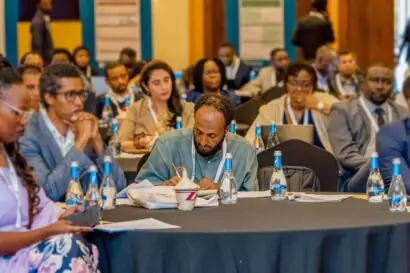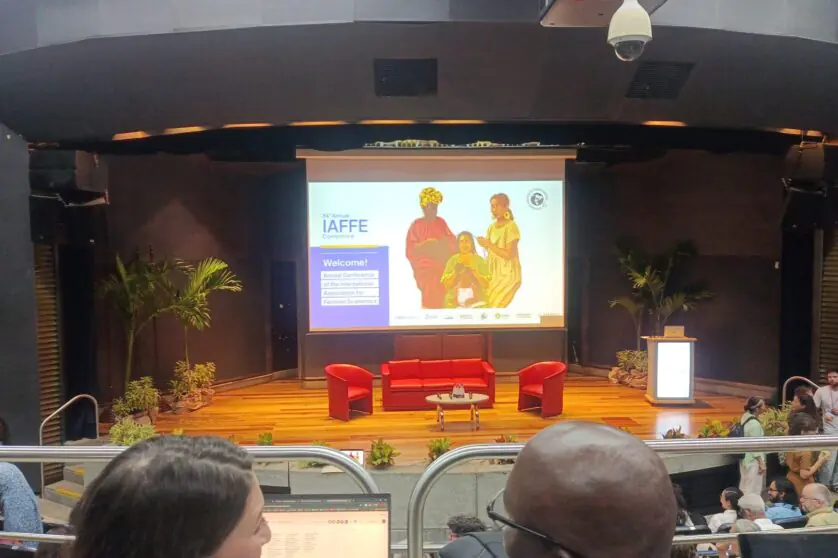
In July, I participated in the 34th annual conference of the International Association for Feminist Economics (IAFFE) in Colombia. I had studied development economics, worked on tax and public finance for several years. I also considered myself familiar with questions of inequality. Yet, gender had rarely featured as a central analytical lens in my economic training. The conference challenged some of my assumptions and left me with three key reflections.
Gaining a better understanding of feminist economics
I studied development economics in a traditional (or orthodox) way. Gender was not a concept I was taught. In fact, during my MA, I don’t recall gender being included among the factors we learnt about when explaining the economic and financial choices made by individuals. Nor do I remember learning how gender norms could affect macroeconomic aggregates such as tax revenues, spending allocations or even the famous “GDP”(or Gross Domestic Product). The topic that came closest to feminist economics was women’s participation in the labour market as a means of strengthening economic growth. That was it. What a disconnected perspective of the real world!
This absence of gender analysis in my training now seems striking. Economic decisions do not take place in a vacuum. They are shaped by social norms, power relations, and unequal access to resources. Feminist economics provides the tools to examine these dynamics and question assumptions that traditional economic approaches often leave unchallenged.
How gender shapes interactions with the economic system
While its origins are older, most feminist economics work gained visibility in the 1990s. It has since developed its own concepts, methodologies and narratives. It is both a school of economic thought and a form of political action that aims “to improve the functioning of the economic system so that all people can have access to a dignified life on the basis of equality”. Feminist economics argues that “economics needs to take account of gender relations because the differences in men’s and women’s roles are integral to how any economy runs”.
The American Economic Association defines economics as “the study of scarcity, or how people use resources”. So how can we talk so little about the unequal burden linked to unpaid care activities in economic models? Likewise, in order to use resources, an individual must have access to and control over them. Here again, gender considerations are pivotal in a world where many women are still denied land, inheritance, a political voice, and agency over their own bodies.
Participating in this conference further convinced me of the usefulness and necessity of feminist economics. And of my desire to contribute to this field.
Experiencing the advantages of discussions involving multiple stakeholders
The discussions between academics, civil society representatives, and public administration officials were particularly rich. Participants from all over the world gathered to present their work, draw parallels with others’ projects and question their methods and contextual differences. In the process, they shaped new narratives and ultimately built new coalitions (a point already highlighted by ICTD at the 2024 IAFFE Conference).
The boundaries between academic and activist projects were often blurred, with some participants occupying both roles. Activists are often criticised for their supposed lack of solid evidence. But I could see how rigorous and impactful the work of tax justice NGOs and CSOs. It was energising to see such strong advocacy in the field of tax and gender.
Multi-stakeholder discussions also provided an opportunity to explore what matters in practice. They offered insights beyond the standard narratives found in academic literature on tax and gender. Hearing directly from researchers, activists, and organisations working with communities helped me reflect on the real-life experiences behind the issues I study and how they relate to my research. It reinforced the importance of ensuring that research remains grounded in the realities of the people and institutions it seeks to understand.
Anchoring my tax and gender work to other fields and places
I presented a chapter of my thesis on gender assessment tools for revenue administrations, alongside ICTD’s work on tax, informality and gender. This gave me the opportunity to engage with researchers and activists working on topics beyond my usual field including gender-responsive budgeting, the care economy, and the history of economic thought. In short, I met people whose expertise differed from my usual circle and who brought alternative perspectives. Their questions and comments helped me take a step back from my work – an attitude I would like to maintain while pursuing my research projects.
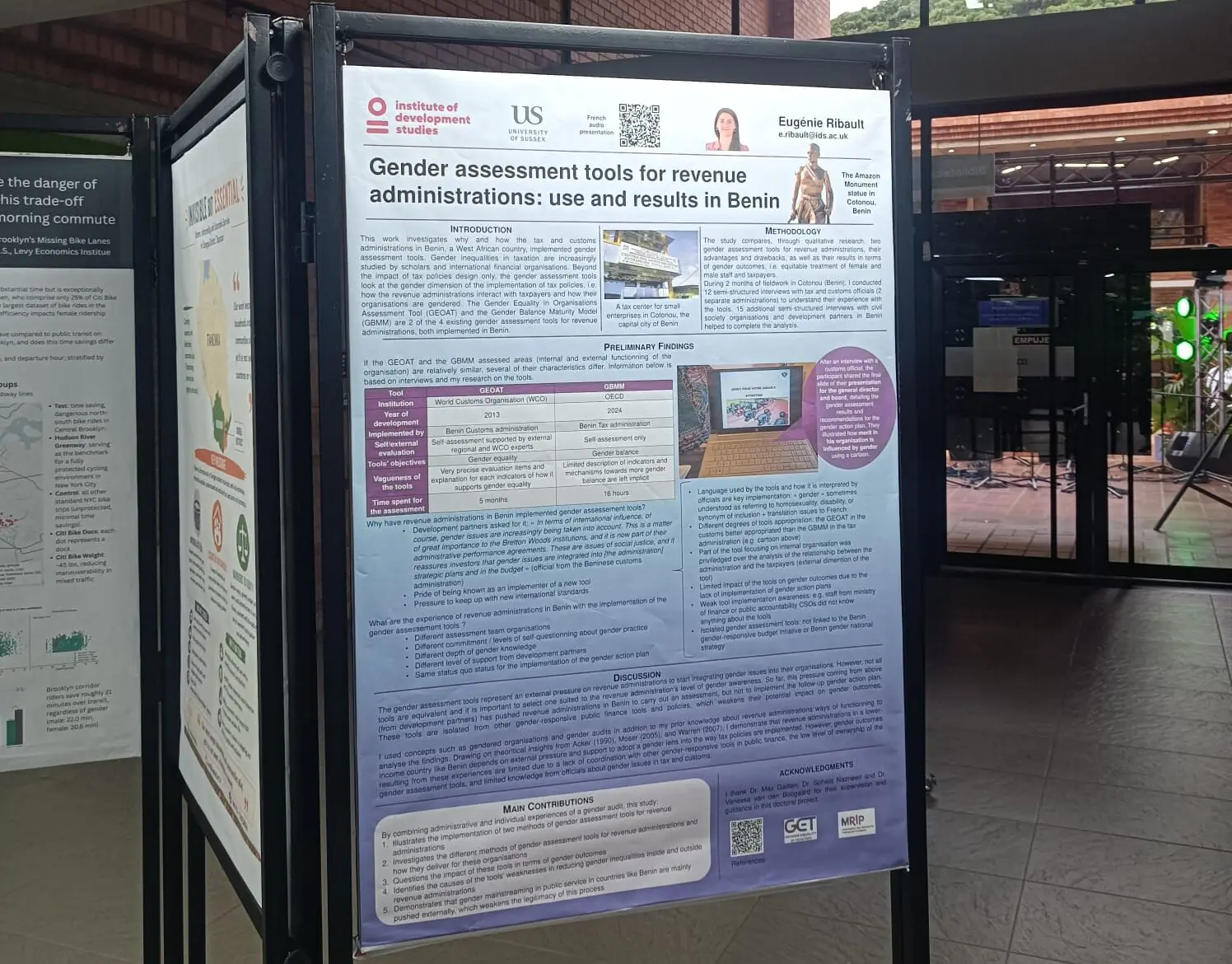
From the conference presentations and discussions, two insights in particular stayed with me. First, I noticed how little interaction there was between gender-responsive budgeting and tax and gender in countries’ current practices. The absence of a holistic feminist fiscal framework limits the capacity of public finance to be genuinely gender-transformative. Second, I was thrilled to discover the impressive recent tax and gender research being conducted in Latin America, both in terms of policy design and administrative implementation. This work clearly connects questions of tax progressivity with the ways in which tax systems can reinforce gender inequalities. It examined issues such as consumption taxes, presumptive tax regimes and the underdeveloped narrative linking gender to taxing the wealthy.
Overall, the IAFFE Conference expanded my understanding of what economic research can be and who it should serve. It reminded me of the importance of questioning established frameworks, creating spaces for dialogue across disciplines and sectors, and remaining open to perspectives beyond my immediate field. I returned from Colombia with new research ideas, new collaborations, and a renewed commitment to integrating gender more deeply into my work on taxation and development.