With foreign aid declining and sovereign debt rising, many lower-income countries are under mounting pressure to raise revenue to fund essential services. As a result, strengthening domestic revenue mobilisation has become critical, offering a sustainable way for local governments to bridge this funding gap, while bolstering their fiscal autonomy and providing the administrative foundation needed to access to other sources of public and private finance. Of the available domestic revenue-raising tools, property taxes stand out as one of the most promising yet underutilised sources of revenue in many African countries: revenue collection as a share of GDP often amounts to only about 10% of the levels achieved in higher-income countries.
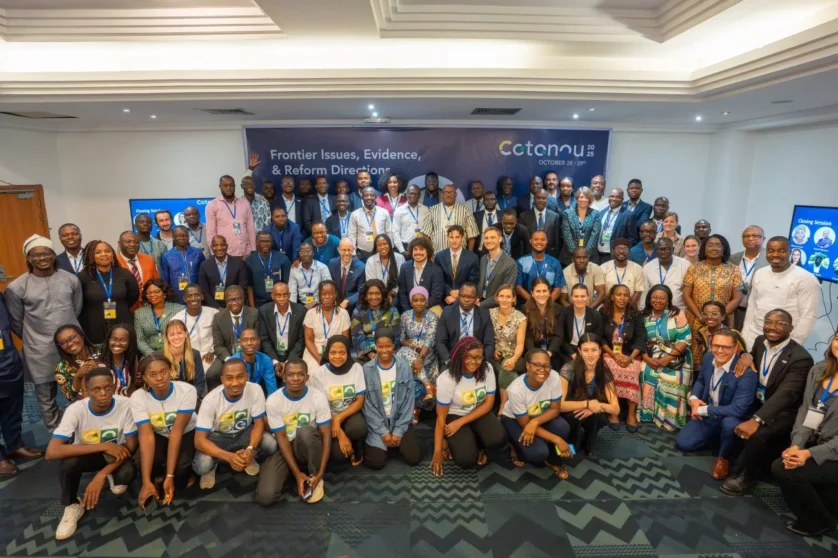
Against this backdrop, the Local Government Revenue Initiative (LoGRI), a semi-autonomous initiative of the International Centre for Tax and Development (ICTD), in collaboration with the African School of Economics (ASE) and the Directorate General of Taxes Benin (DGI) – and with support and participation from the Fund for Innovation in Development (FID) – hosted a conference in Cotonou, Benin from October 28-29, 2025 to discuss how local governments can tap into the potential of property taxation, share experiences about common barriers to reform and brainstorm emerging, innovation solutions.
Building momentum for property tax reform
The two-day event, themed “Frontier Issues, Evidence, and Reform Directions,” brought over 100 leading property tax experts, policymakers, and practitioners from around the world to Cotonou to foster interactive exchange and mutual learning on property tax reform.
In his opening remarks, Nicolas Yenoussi, the Director General of the DGI Benin, highlighted that property tax performance in Benin amounts to 0.2% of GDP and that “this meeting in Cotonou is a genuine opportunity to work together to develop practical and operational solutions to strengthen the administration of property tax.”

Discussions centred on bolstering inter-institutional collaboration, linking land administration and property taxation, improving public trust, compliance, and legitimacy, and leveraging property tax data to strengthen public administration.
“At the core of this conversation are citizens, the social contract, and the political leadership required to build and sustain public trust in reform. These issues are not new, but recent economic pressures — rising debt, shrinking national transfers, and declining aid — have made them more urgent than ever,” said LoGRI’s Executive Director Titilola Akindeinde.
Speakers and attendees shared past and ongoing reform experiences from across Africa, highlighting practical lessons and persistent barriers they continue to face. Some key takeaways include leveraging GIS tools to facilitate large-scale property identification and mapping exercises, leveraging property tax data for urban planning purposes, and centring enforcement measures on properties, rather than the owners.
A platform for collaboration
The conference also provided a valuable platform for international experts, government representatives, and policymakers to drive dialogue on property tax reform across lower-income countries, engage in peer-to-peer learning, and identify avenues for future research. A clear message emerged from the discussions: the path to effective property tax reform relies on a strong evidence base, careful institutional and administrative design, and a commitment to iterative learning.
“This LoGRI-ASE-DGI conference is part of our commitment to bring research closer to public action. By bringing together researchers, policymakers and technical partners, this initiative contributes to a constructive dialogue that makes it possible to adapt tax policies to the economic and social realities of our countries. Africa has talent, resources and ideas; All that is often missing are frameworks for reflection and shared experimentation,” said Renaud Tovo, Director of Administration and Finance at ASE.
LoGRI expects the insights shared and connections formed will guide further research, inform government decision-making, and inspire practical reforms in the months and years ahead. LoGRI and its partners will continue supporting governments as they navigate these challenges and work to build more transparent, equitable, and financially sustainable revenue systems.
The full conference agenda and recordings of the plenary sessions are accessible on the LoGRI website. Watch the full conference recap video below.
This news article was first published by LoGRI.