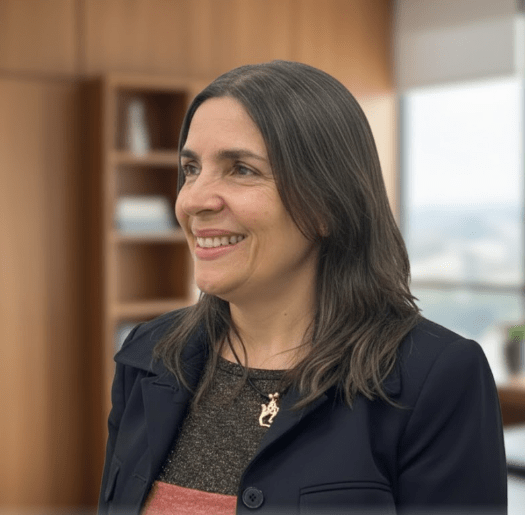
We spoke with Rosa Maria Rodrigues De Abreu, 2022/23 alumna of the ICTD Research on Tax and Development course. From 25 years in Venezuela’s tax administration to consulting across Lusophone Africa, Rosa reflects on how research, trust, and knowledge build stronger tax systems, and how inclusivity and accessibility have shaped her journey.
Stephanie: Can you introduce yourself and tell us about your professional journey?
Rosa: I am originally from Venezuela, where I worked for 25 years in the national tax administration. I trained as a lawyer, but very early in my career I realised that taxation was where I could have the greatest impact, especially in a low-income country context.
About ten years ago, I moved to Portugal with my family. Following my retirement from a long-standing career in the public sector, I decided to seek new professional opportunities abroad, motivated by the pursuit of a more stable political and economic environment for my family’s future.
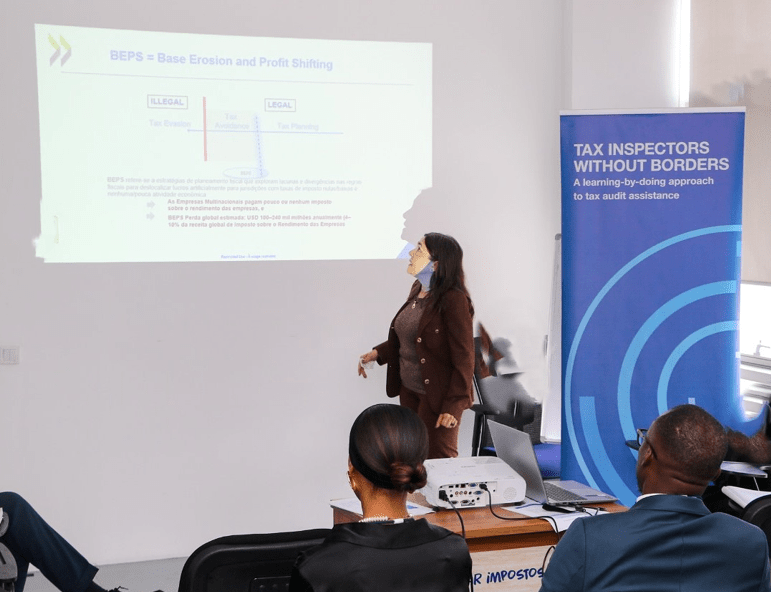
Since 2019, I’ve working as an Expert Tax consultant with Tax Inspectors Without Borders (TIWB), a joint initiative of the OECD and UNDP. Through this programme, I support tax administrations in countries such as Angola and Mozambique, particularly in international taxation and transfer pricing.
I am also a PhD candidate in International Relations, Geopolitics, and Geoeconomics at the Autonomous University of Lisbon.
Stephanie: What drew you to taxation in the first place?
Rosa: I saw taxation as a dynamic and powerful field, one that evolves with the economy and directly shapes development. Practically speaking, taxation is central to state functioning. Without revenue, there are no public services, no infrastructure, no resilience. But tax is not just technical; it defines the relationship between citizens and their government.
Having worked both as a tax official and as a taxpayer myself, I understand now both sides.
Stephanie: Why did you apply for the ICTD Research on Tax and Development course?
Rosa: At the time I was investigating digital taxation and cryptocurrency in Venezuela and El Salvador as part of my doctoral studies and found several papers published by ICTD on this topic.
I applied for the course after seeing the call for applications in ICTD’s newsletter. The course was unique, focusing on low-income countries and covering cutting-edge topics often overlooked by other institutions such as gender and taxation, informality, and taxpayer registration (see also here and here).
But most importantly, it was accessible regardless of age or background. That inclusiveness meant a great deal to me especially that I applied at a later stage in my life and career when universities would have rejected me because of my age. ICTD on the other hand, offered me an invaluable opportunity.
Stephanie: You developed a research project during the course that was later published. Can you tell us about it?
Rosa: Yes, my course project was a continuation of my doctoral studies. Since I’m from Venezuela, cryptocurrency is a particularly intriguing topic as it’s widely used to circumvent US sanctions and restricted access to foreign currency. Venezuela is also the first country to have created a Central Bank digital currency (the Petro). El Salvador on the other hand is the only country where Bitcoin is legal tender.
Through my project, I analysed how governments approach taxation in these contexts and the challenges involved. The research on Venezuela was published as a chapter in the 2024 IBFD book Crypto Assets: Tax Law and Policy. Whereas a section of my study on El Salvador was published in Portuguese through my university.
Stephanie: How did the course then influence your academic and professional development?
Rosa: The strongest impact was methodological. It deepened my understanding of both qualitative and quantitative research particularly how to design surveys, conduct interviews, and approach field research rigorously.
This has directly strengthened my PhD work, which now focuses on carbon taxation and climate finance mechanisms in Brazil and Mexico.
Finally, the course broadened my perspective. It informs my advisory work with TIWB, where understanding informality, gender dynamics, taxpayer behaviour, and institutional capacity is essential.
Stephanie: How did this new perspective shape your work with low-income countries?
Rosa: On the point of institutional capacity – through my experience in Angola and Mozambique, I see how important capacity building is, not only for tax officials, but also for judges and institutions that interpret tax law. For example, if courts do not fully understand tax issues, decisions can undermine tax administration. This truly illustrates how essential strong institutions are for fair and effective systems.
To address this gap, I have helped deliver trainings to strengthen the understanding of taxation within judicial systems.
Stephanie: What are your aspirations for the future?
Rosa: I hope to continue working at the intersection of research and practice. Once I complete my PhD, I would like to teach and publish more widely. I believe academic research and evidence should inform real-world policymaking.
Coming from Venezuela, I feel strongly about supporting low-income countries in building fair and sustainable tax systems.
My career has moved from national administration to international advisory work and now towards academia, but my mission remains the same: strengthening taxation as a tool for development.
Stephanie: Are you still connected with other ICTD alumni?
Rosa: Yes, I remain in contact with several colleagues from the course. The exchange of ideas was one of the most valuable aspects of the programme. Learning from peers from different backgrounds and working in different regions broadened my understanding of global tax challenges. I hold very fond memories of this course, as well as friendships and professional relationships that I know will last a lifetime and will continue to inspire me.
Stephanie: Any advice you can give to people in situations similar to yours, who have later in life decided to further develop a skill?
Rosa: First and foremost, I believe it is essential to understand that it is never too late. The moment you decide to cultivate new skills is always the right moment, regardless of your age or current circumstances. My primary advice is to never feel discouraged or fall into the trap of thinking you’ve missed your window of opportunity.
For those specifically looking to sharpen their research and professional development capabilities, I highly recommend enrolling in the ICTD Research on Tax and Development course. This program is an excellent investment; it provides the necessary techniques and methodologies to conduct research with greater confidence, precision, and success.
Beyond the technical aspects, it equips you with the practical skills needed to lead and secure funding for research projects, competencies that are directly transferable and highly valuable for your ongoing professional growth.