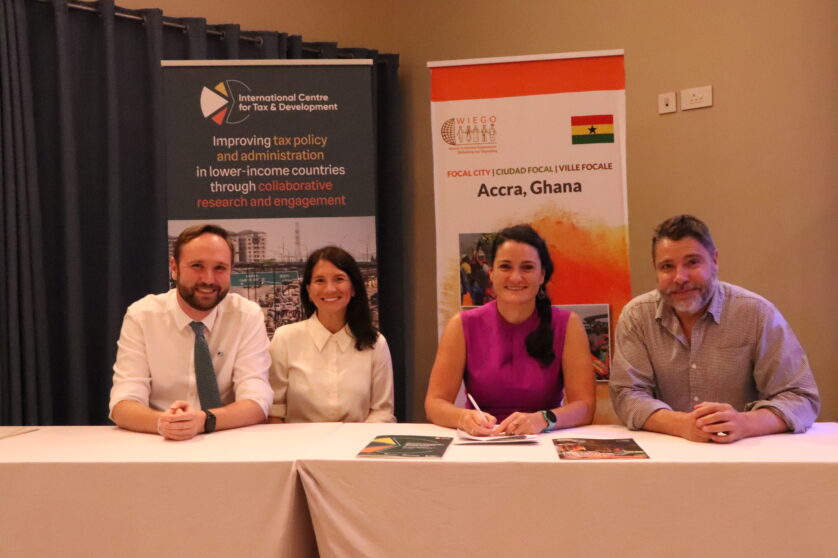
The International Centre for Tax and Development (ICTD) has signed a memorandum of understanding (MoU) with global research and advocacy network WIEGO, formalising a long-standing collaboration on research and informal sector taxation.
Having worked together since 2021, ICTD and WIEGO (Women in Informal Employment: Globalising and Organising) committed to extend their partnership for the next five years to produce and disseminate high-quality research, particularly in the context of developing and middle-income countries.
WIEGO is a global network that supports the movement of workers in informal employment, especially women and people living in poverty, through the production of research, relevant data, and policy analyses.
Reflecting on the new MOU, Research Fellow Max Gallien, co-lead of ICTD’s programme of work on Informality and Taxation, said “partnering with WIEGO adds real depth to our work.”
“Their longstanding relationships with informal worker organisations and deep understanding of grassroots dynamics mean our research is not only informed by lived experience, but also more likely to contribute to meaningful, grounded policy and practical change,” he added.
Michael Rogan, Research Associate in WIEGO’s Urban Policies Programme, shared this view: “What’s been really nice is that our partnership [thus far] has been able to combine our respective strengths. WIEGO brings expertise on worker perspectives from the informal sector and ICTD brings a wealth of experience on tax design in low-income countries, as well as strong relationships with revenue authorities.”
“Both organisations have similar approaches to doing research which is meaningful for policy and which has a broader interest in informing progressive, equitable and worker-friendly development outcomes,” added Rogan, who leads WIEGO’s research on taxation in the informal economy.
Engaging diverse stakeholders
Beyond research collaboration, ICTD and WIEGO agreed to jointly engage with revenue authorities on the design of fair and progressive taxation policies, as well as to support organisations of informal workers to use the research produced in their own advocacy efforts.
This is especially relevant now given that revenue authorities across country contexts are facing substantial pressure to collect more taxes from unregistered firms, yet the strategies currently in place to do this tend to disproportionately hit lower income groups.
ICTD Research Fellow Vanessa van den Boogaard, who co-leads ICTD’s informality and taxation work with Gallien, underscored this: “Now, as governments strive to boost revenues without deepening inequality, it’s vital that informal workers have a seat at the table – and that tax policies reflect their realities.”
“This partnership unites our evidence-based research and WIEGO’s grassroots insights to do just that. I look forward to deepening our impact with policymakers and worker organisations,” she added.
Ongoing and previous work
A key project covered by the MoU focuses on the case of Ghana, probing the varying perspectives on tax policy within the country’s informal sector, specifically among market traders. The study is being implemented along with the Institute of Statistical, Social and Economic Research (ISSER) at the University of Ghana. Read more about it here.
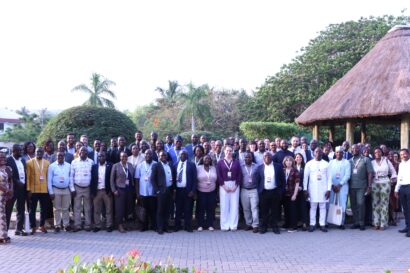
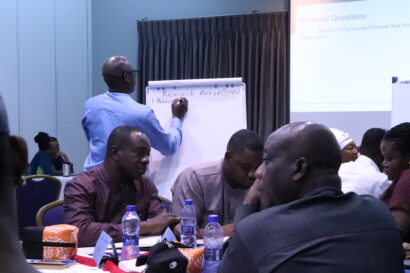
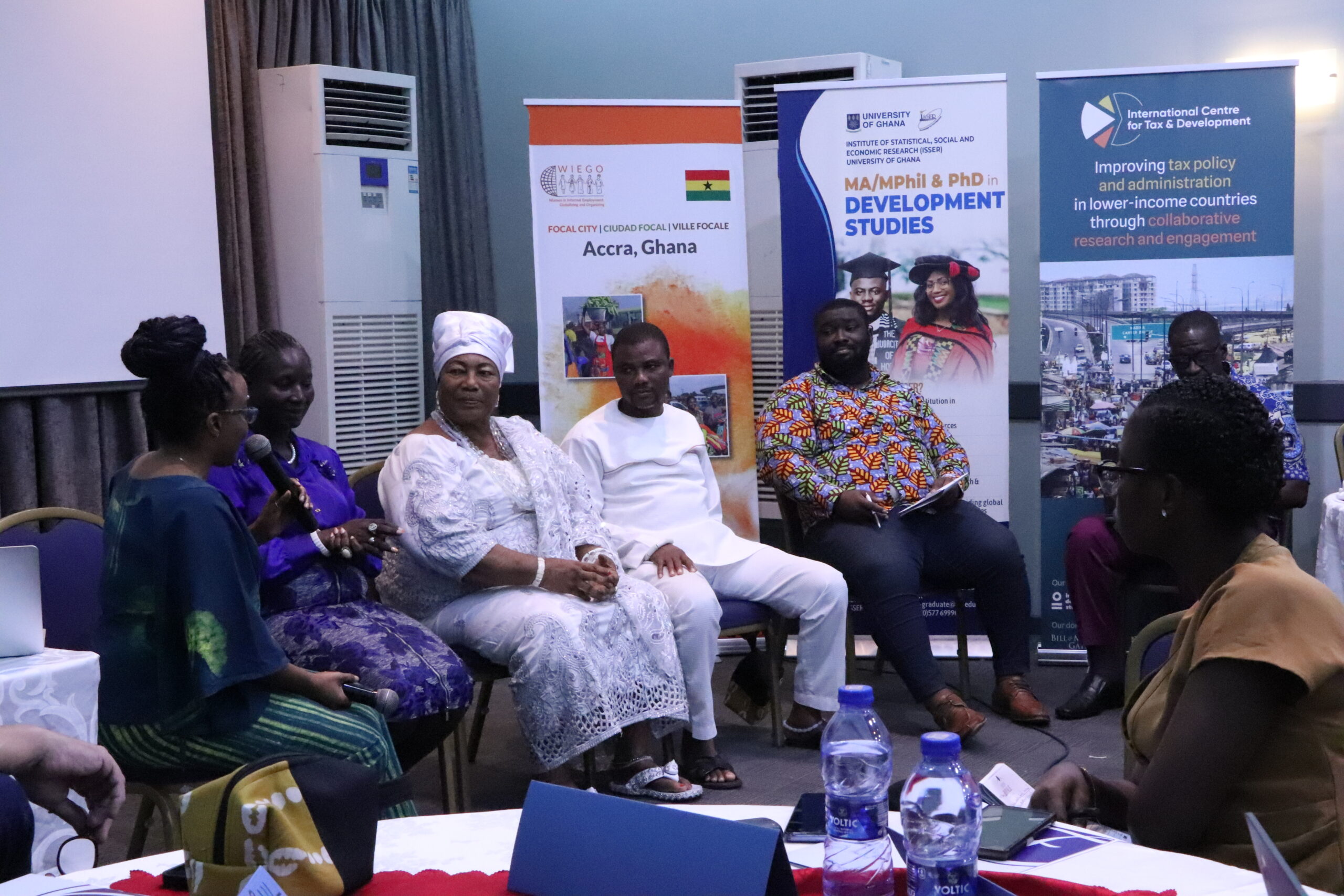
Prior to this, ICTD and WIEGO co-organised a three-day workshop in Accra, Ghana in February, which convened around 150 delegates from revenue authorities and ministries of finance across Africa, research institutions, and civil society organisations.
A key outcome from this workshop was the creation of a Community of Practice on Informality and Tax, hosted by ICTD, establishing a platform to sustain and deepen conversations across concerned stakeholders on the taxation of informal economies. Register here to become a member.
More recently, WIEGO interviewed Gallien about ICTD’s engagement with the Fourth International Conference on Financing for Development (FfD4).
See more of ICTD and WIEGO’s previous collaborations here.