Exchange of information is a crucial pillar of international tax cooperation and an important area for future international tax governance under the UN tax convention. The current negotiations continue to debate how this new governance regime should relate to pre-existing instruments, standards, and norms, and the extent to which it should be grounded in the same basic rules that underpin the current system.
This debate is particularly significant given that, in the most recent publicly available draft of the Convention, language from existing standards was directly incorporated into the text. This includes provisions on confidentiality and the principle of “foreseeable relevance,” under which countries are required to exchange tax information only if it is foreseeably relevant to the enforcement of tax laws in the requesting country. Such standard currently appears in a bracketed form, and during negotiations some delegates noted that it does not adequately meet the needs of developing countries and has been applied in a rigid way to prevent information exchange at the fullest extent possible.
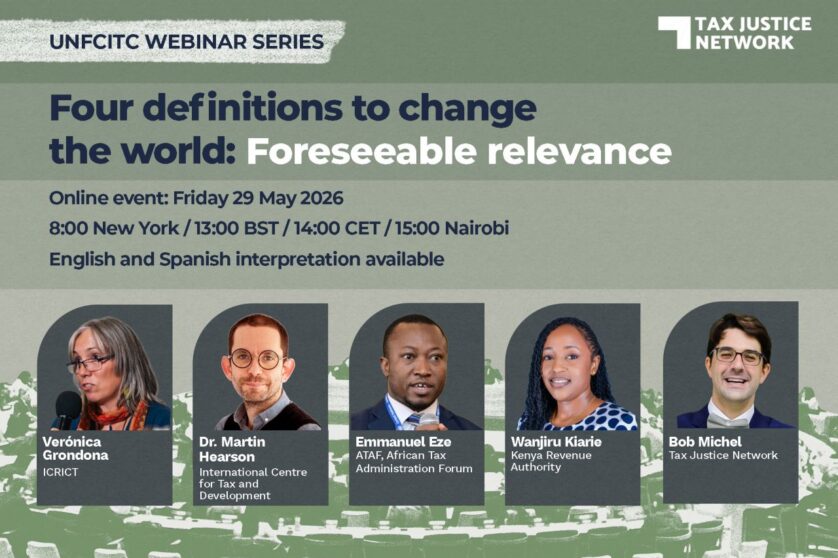
This week, ICTD Research Director and International Tax lead Martin Hearson will join the panel hosted by the Tax Justice Network (TJN) on existing frameworks in the context of the proposed UN tax convention. The panel will evaluate current instruments and frameworks, their merits, and their limitations in order to contribute to the development of an exchange of information regime that is inclusive and universal.
Speakers
The session will be moderated by TJN’s Senior Comparative Policy and Legal Analyst, Bob Michel. Other speakers, apart from Dr Hearson, include:
- Ms Verónica Grondona, Senior Advisor, Independent Commission for the Reform of International Corporate Taxation (ICRICT)
- Mr Emmanuel Eze, ATAF Senior Policy Advisor to the African Union
- Ms Wanjiru Kiarie, Kenya Revenue Authority
Watch the webinar recording
To view Martin’s presentation directly, watch from 00:07:00.